The Simonitti Mill, also known as Malin v Barnase, was located in the central part of Vernasso, a village whose name possibly derives from the Latin "vernaceus" (a place to ascend in spring) or the Celtic "verna" (alder). The village is crossed by the Rio Grande stream (Veliki Potok). The first document mentioning the mill dates back to 1498, referring to a miller named Simaz, a member of the confraternity from Castelmonte. The mill operated until 1948.
The millstone was situated on the ground floor, sunken from the street level, with the living quarters above. The adjoining two-story structure housed the former stable and hayloft. A water collection basin, fed by two perennial springs, was located laterally: one spring (studenac) was upstream of the basin, and the other crossed the Rio Grande via an overhead channel. By opening the east gate, water was directed to the upper part of the iron (formerly wooden) wheel. The movement was transmitted to the mill gears, the stone grinder, and the hopper.
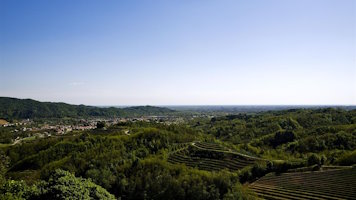
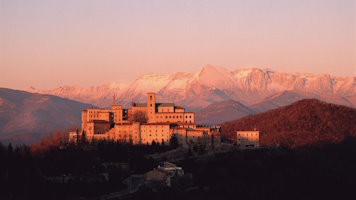
Vernasso (165 meters a.s.l) is situated in a wide basin between Mount Mladesena and Mount dei Bovi. It has three towns. In the upper part, there is a chapel dedicated to St. Bartholomew (15th century), while the lower part hosts the parish church of St. Maria Consolatrice, a Marian sanctuary (16th century) rebuilt in 1775. Behind the town lies Hlieva (stables), once used as pastureland, with buildings once occupied during the summer months, now completely abandoned.