Rural Village of Topolò/Topolove
The name derives from the Slovenian word for poplar (topol), hence Topolove/Topolò. A document from 1275 mentions it among the fiefdoms of Canone and Volrico of Mumigliano, and recent research traces the origins of the village to before the 10th century.
One of the largest villages in the valley, it had about 400 inhabitants in 1921, distributed among 53 families, descended from two indigenous dynasties: the Gariup, settled in the upper part of the village, and the Rucli in the lower part.
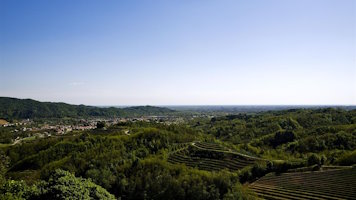
Located in a sunny position, it is characterized by compact buildings, interrupted by a narrow inlet used for vegetable gardens, which divides the upper village from the lower one. The village is surrounded by tiny fields supported by dry-stone walls that adapt to the morphology of the slope.
The settlements include houses, stables and outbuildings, separated by narrow paved pedestrian streets. The most typical house is the izba house, with two rooms per floor, rising over three levels: the basement floor is used as a stable or cellar, the mezzanine floor as a dwelling, with the black kitchen (crna kuhnja) for food preparation, always filled with smoke, and the attic, only partially habitable. In the kitchen, there is a low open hearth and the feed mouth of the stove/oven called pec, surrounded by wooden benches that serve as beds for warming up in winter; a door leads into the living room (izba). There are houses like these, still habitable, both in the lower and upper parts of the village.

ph. Stefania Gentili

ph. Stefania Gentili

ph. Stefania Gentili

ph. Amerigo Dorbolò Uek, Pro loco Nediške Doline