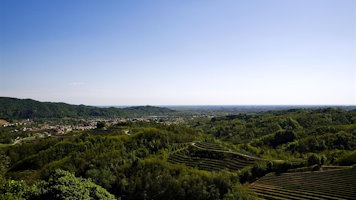
The small church appears to have been built on a Roman chapel: the first document mentioning it dates back to April 14, 1472, signed by the notary Paolo Mignei. The building was likely completed in 1488 (date carved on the portal's lintel); a few years later, the apse was added. In 1503, the church was consecrated and then enriched with a wooden altar and frescoes. In 1644 (date engraved on the keystone of the atrium's front arch), the atrium and sacristy were added. The church features a single hall that ends with a polygonal apse with a ribbed vault. The ribs are supported by corbels depicting heads of saints. The portico is open on two sides with round arches. To the left of the entrance door, there is a boulder on which a "human footprint," is visible which popular tradition attributes to an apparition of Saint John. On either side of the architraved portal, topped by a 17th-century blind lunette, there are two rectangular windows. The church is flanked by a sturdy bell tower opened at the top with four mullioned windows. Inside, there are two frescoes by the Bavarian artist Gian Paolo Thanner, created around 1530. Additionally, there is a wooden altarpiece with two tiers and six compartments, housing the same number of figures of Saints, made by Vincenzo da San Vito in 1516. The church offers a magnificent view of Udine and the Friulian plain.