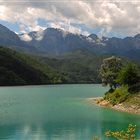
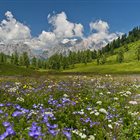
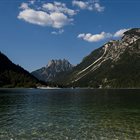
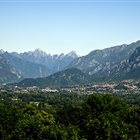
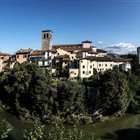
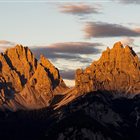
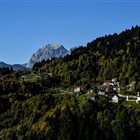
Thousand-year-old cultures, different linguistic strains, biodiversity and multifaceted territorial morphologies. Discover the peculiarities of the valleys, municipalities and areas of the mountains of Friuli Venezia Giulia
Discover the mountain Regions
Thousand-year-old cultures, different linguistic strains, biodiversity and multifaceted territorial morphologies. Discover the peculiarities of the valleys, municipalities and areas of the mountains of Friuli Venezia Giulia
Summer or Winter, it doesn’t matter: skiers, pedestrians, hikers, bicycle lovers or who simply loves to enjoy a panoramic view, but without getting tired, will find open Ski lifts all over the year in the ski areas of FVG
Discover the Ski areas in Friuli Venezia Giulia
Summer or Winter, it doesn’t matter: skiers, pedestrians, hikers, bicycle lovers or who simply loves to enjoy a panoramic view, but without getting tired, will find open Ski lifts all over the year in the ski areas of FVG
A secondary peak located between the Creta Forata and the homonymous pass, it is one of the few summits accessible to hikers with little experience. It has a rocky spire summit beneath which extends a wide mainly grassy ridge representing the smaller northern summit, which drops towards the valley below with a large and steep overhanging wall. To the west there is a tall and bold vertical rock face.
moderate
Distance 3.3 km
Duration2:15 h
Ascent690 m
Descent56 m
Highest point2,256 m
Lowest point1,622 m
The proposal deserves consideration because, although a modest summit in altitude and not particularly attractive in its shape (except for the western side) and somewhat enclosed by the imposing masses of Creta Forata and Piccolo Siera, it offers the pleasant surprise of a very wide and unexpected panorama that opens towards the Dolomites of the Pesarina valley, the Coglians, the mountains of Volaia, the Peralba-Chiadènis-Avanza group, the Bivera-Tudaio, and even the distant Dolomites beyond the Piave river. The route is, wrongly, very little used due to the presence of the nearby Creta Forata. It is sunny, varied, not strenuous, and will lead you to another delightful and secluded corner of the Sappada mountains, in a realm of silence and solitude, with the chance, if you are lucky, to also see some chamois. You will also enjoy a small taste of adventure as the last part of the route has neither path nor markings.
Author
Giovanni Borella
Responsible for this content
Friuli Venezia Giulia
Verified partner
Difficulty
moderate
Overall difficulty
moderate
Derived from the technical difficulty and the stamina requirements.
Experience
Landscape
Highest point
2,256 m
Lowest point
1,622 m
Best time of year
Jan
Feb
Mar
Apr
May
Jun
Jul
Aug
Sep
Oct
Nov
Dec
Track types
Show elevation profile
Safety information
Difficulty: E/EE
Tips and suggestions
WARNINGS
The information below cannot substitute the presence of a professional alpine guide
The mountain is a wonderful environment but not free from risks, so it must always be approached with the utmost caution
In the Warnings of the CAI/TCI Mountains of Italy Guides it reads that the difficulty classification “remains essentially indicative and must be considered as such”, as it is a subjective element. This also applies to the itineraries proposed on the site
The classification of difficulties and travel times refer to a hiker/mountaineer of average level regarding training, experience, skills, training
When undertaking a certain route, carefully assess difficulties, your own skills, and your level of training
Before tackling an itinerary (unless it is a short walk) it is good practice: 1) to consult the Dolomiti weather by Arpav, by connecting to the site http://www.arpa.veneto.it or calling 049 8239399 (Option 2). Unlike national weather forecasts, this bulletin offers a rather reliable local forecast. 2) to obtain information from the Tourist Office, the local CAI section, alpine guides, refuge managers. Indeed, the state of passability of an itinerary and its difficulty level may undergo significant changes even within a very short period due to natural events (landslides, unfavorable weather conditions) and/or contingent situations (deterioration of signs, fixed equipment, presence of residual snowfields, etc.)
The mobile phone can give a false sense of security, because there are areas without phone coverage
In the unfortunate case of accident, illness, inability to proceed, contact only and exclusively SUEM 118
Giovanni Borella Born in Belluno, he lived there until the cusp of adolescence. He subsequently moved to Padua, where he still lives, attending the local University and earning a degree in Ancient Literature which led him to teaching for several decades. Hiker first, mountaineer later, he has made numerous ascents both in the most famous Dolomite groups and particularly on the mountains of Sappada, which he has frequented for many years both summer and winter and where he has also opened new routes and solo repeated others. He has published three guides: "On the paths of the sun" Mediterranee ed. 1995 as a coauthor, "Sappada, from trails to summits" Co.El. 2002, "Dolomites of Comelico" Linteditoriale 2010.