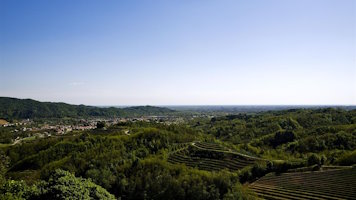
These small villages develop along the Lagna stream, with buildings that, due to the 1976 earthquake, lost their original features. Cergneu is first mentioned in 1170 when Ulrico di Attimis donated it to the Patriarch of Aquileia. In 1270, the Cergneu castle was founded and burnt by peasants in 1511, leaving only a few remains today. In the 14th-15th centuries, Upper Cergneu was under the command of the steward of Tricesimo, while Lower Cergneu was administered by the Savorgnan family. In the centuries following, both belonged to the Brazzà Cergneu lords, albeit with some brief interruptions. Borgo Pecolle, from the 13th century until the end of Venetian rule, remained under the control of the Attimis family. In the Lase village, there is a stone loggia building with wooden racks and an underlying portico; in Rupe, there is a stone cottage, in the shape of a tower, with traces of wooden balconies. Casa Comaro displays a devotional fresco depicting the Holy Family dated 1859, spread over an "L" shape, with a wooden loggia at the back. Near the Lagna stream is the contemporary Comaro mill, which preserves part of the milling equipment and the remains of the iron wheel. In Nongruella village, there is one of the most beautiful loggia houses: the stone building has a south-facing façade with pillars and capital brackets, where the beams of the wooden loggia frameworks with racks rest.