Medieval castle and church of the Madonna di Zucco
[13th-16th centuries]
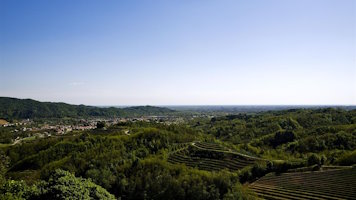
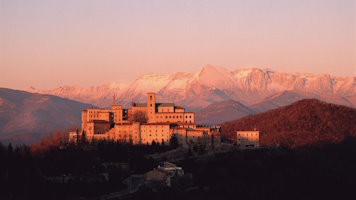
Zucco Castle (“zuc” meaning hill), set on “Rodingerius” hill overlooking Faedis and the entrance to the Grivò canal, was built in 1248 by feudal lord Adalpretto of Cucagna, of the older castle posted on the upper hill. The castles inhabited by the Cucagna nobles who arrived in Friuli in the 12th century (following Patriarch Ulrich II of Treven), share the same historical events. The Cucagna nobles, closely linked to the Piccolomini of Siena, the Camino of Treviso, the counts of Gorizia, and the Torriani, resided in both Zucco and Freschi branches of the family. Zucco castle remained in use until the 16th century, while the Cucagna castle was abandoned in the second half of the 14th century. The castle complex had a double-walled structure with a wide moat and an entrance from the southeast side through a gate-tower. The interior comprised the keep tower, the fortified Domus, residential structures, and the castle chapel, which is still intact. The medieval path from Borgo Santa Anastasia to Canal di Grivò in Faedis leads to the castle and the church, showcasing an ancient chapel, Madonna of Zucco, once smaller, built by Gabriele di Zucco on pre-existing foundations. The now larger building dates back to the 16th century with 17th century variations. The facade has a bell-shaped window, lead by a gabled porch, and arches on three sides. A 15th century fresco depicting the Virgin nursing the Child is set on the wooden altar, with strong Tuscan and Emilian art school influences.

ph. Giacomo Toffoletti, Archive Comune di Faedis

ph. Giacomo Toffoletti, Archive Comune di Faedis

ph. Giacomo Toffoletti, Archive Comune di Faedis

ph. Giacomo Toffoletti, Archive Comune di Faedis